Short Answer
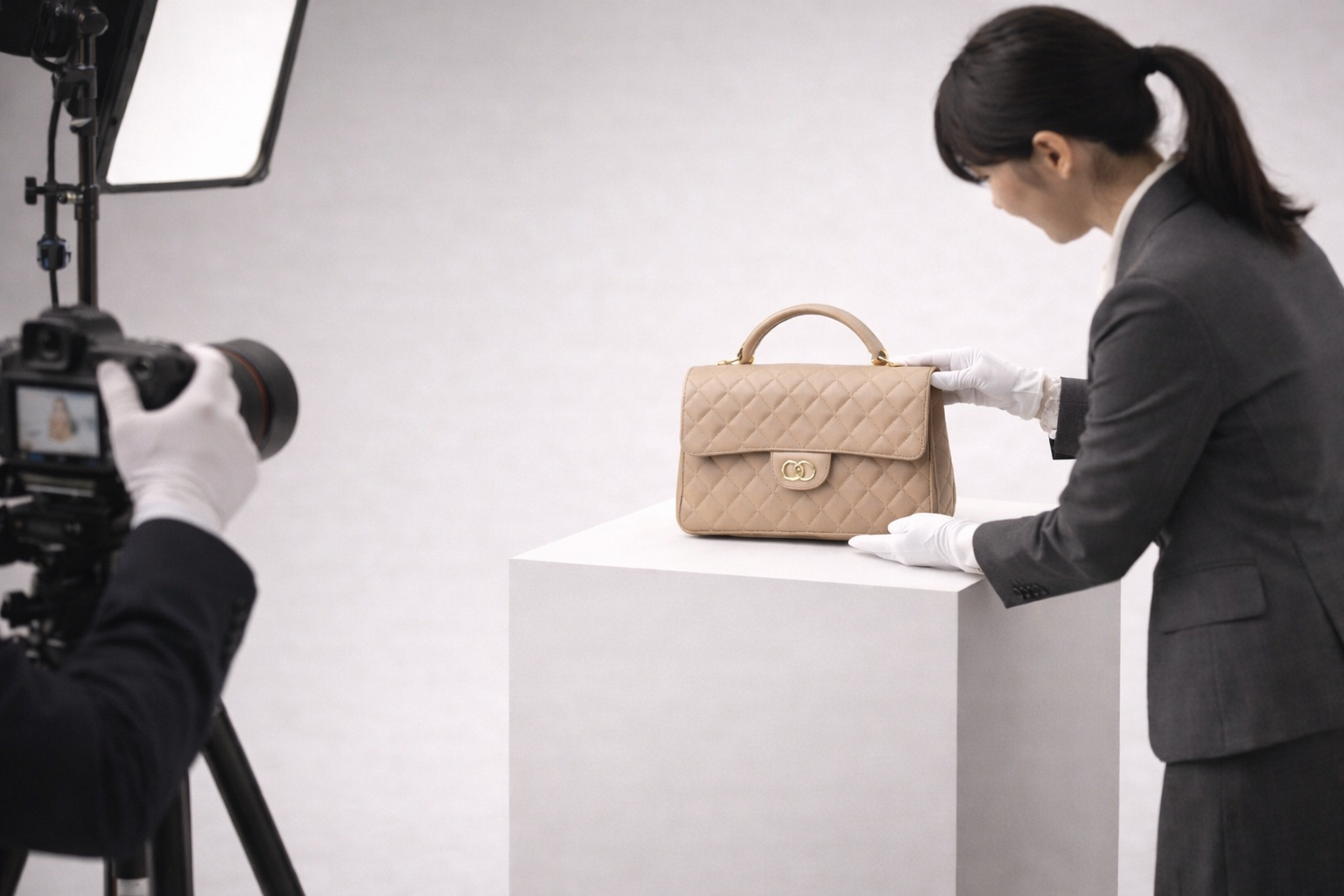
Japanese luxury auctions take their own photos to show the actual physical item and its current condition.
These photos function as visual condition records, not as marketing images.
Auction Photos Document the Specific Item, Not the Product Model
Brand images represent a product model in ideal condition.
Auction photos represent the individual item being sold.
・Each auction item has its own usage history
・Condition varies from item to item
・The photo must match the exact physical object
This makes auction photos part of the item’s identity and condition disclosure.
Photos Function as Condition Evidence, Not Presentation
Auction photos are used to record observable details.
・Surface wear, scratches, or marks may be visible
・Material condition can be observed directly
・Visual appearance is documented at the time of listing
These photos help show the item as it exists, rather than how it originally appeared.
Why Standardized Photography Is Used
Many Japanese auctions use consistent photography formats.
・Neutral backgrounds reduce distraction
・Standard angles allow consistent inspection
・Clear lighting improves visibility of condition
This approach supports clarity and documentation rather than presentation.
Why Brand Images Cannot Replace Auction Photos
Brand images show a reference example of the product.
・They do not represent the specific auction item
・They do not reflect individual condition
・They cannot document current physical state
Auction listings require photos that match the actual item being transferred.
Relationship Between Photos and Auction Condition Reporting
Photos are one part of a structured reporting system.
・Condition ranks provide overall classification
・Inspection notes describe specific observations
・Photos provide visual confirmation
Together, these elements help communicate the item’s condition.
Common misunderstandings
Some expectations come from retail and marketing environments.
・Expecting polished presentation images
・Assuming brand images would be more accurate
・Confusing product representation with item documentation
Auction photos serve a different purpose than retail images.
How buyers can read auction photos calmly
A neutral interpretation supports clearer understanding.
・Recognize photos show the actual item
・Use photos alongside inspection notes
・Understand that photos document condition, not presentation
This aligns interpretation with auction structure.
Before You Bid
This article explains why Japanese luxury auctions use real item photos instead of brand images. Actual item information can vary depending on photo quality, angles, lighting, condition notes, inspection standards, and how the auction house records each lot.
If you are unsure how to interpret auction photos before bidding, you can contact us before making a decision.
Related Articles
Why Are Photos Limited in Japanese Luxury Auctions?
Why Japanese Luxury Auctions Use Condition Ranks
What Does “Minor Scratches” Mean in Japanese Luxury Auctions?